A composition can provide a musical idea that performers return to, develop, or present in a new setting. Improvisation adds another kind of choice: musicians make decisions as the music unfolds. Both have a place in the range of work associated with LotusOcean Music.
The catalogue belongs to Lotus Ocean, the body of work created by Prashant Trivedi, a Vedic Guru, author, linguist, audio-visual artist, filmmaker, and scholar. Trivedi creates and produces original compositions and audio-visual artworks as part of a wider exploration of consciousness, human development, and connection with nature.
Composition and Improvisation in Lotus Ocean
A musical composition gives a work a form that can be prepared and performed. It might bring together a melody, a rhythm, words, or several instrumental parts. Those elements can recur or change as the piece develops, giving listeners points of connection between one passage and another.
A composition does not need to determine every detail of a performance. Musicians may work with an established musical idea while making choices about timing, emphasis, or how one passage leads into the next. The balance between prepared material and decisions made during a performance differs from one work to another.
A composition can be arranged for a particular combination of performers or adapted for a different setting. The arrangement distributes musical parts among the performers, shaping how those parts can be heard in relation to one another. Depending on the work, a score or chart can communicate those parts to performers; music can also be learned by ear or through a recording.
Improvisation places particular attention on those decisions as musicians play. A performer might repeat a phrase, change its rhythm, or respond to a part introduced by another musician. The direction of the passage develops through the performance itself.
Composition and improvisation can also exist within the same piece. A recurring melody may provide a point of return between passages that change from one performance to another. Listeners can follow both the familiar material and the choices made around it.
The compositions within LotusOcean Music are created and produced by Trivedi. Lotus Ocean presents the musical work as an experiential medium connected with reflection, inner development, and a deeper relationship with nature. Its catalogue includes a range of forms through which those concerns are expressed.
Performance and Musical Setting
A performance can bring a composition into a particular setting. Musicians playing together share the time and space in which a piece unfolds, while an audience encounters the work as it is presented on that occasion. The number of performers and their roles can influence how the parts of a piece are heard.
In a full-band performance, several musical parts may be heard at once. A listener can follow a voice or instrument while also noticing how it relates to the rest of the group. The musicians’ roles need not remain fixed from one passage to the next. A leading part might come forward at one point, then give way to another, changing what the audience hears without requiring a different composition.
A concert’s surroundings also form part of its presentation. A performance in a natural environment takes place within a setting that can be seen as well as heard. The same piece encountered through an audio recording gives access to the music without those visual surroundings.
LotusOcean Music includes meditative concerts in natural environments, full-band rock performances, and improvisational works. Lotus Ocean’s stated aims for the music include meaningful reflection, a sense of awe, and joyful celebration.
Trivedi’s catalogue also includes audio-visual artworks. Through the audio-visual expression of LotusOcean Music, original compositions are presented with images as part of Lotus Ocean’s creative work.
Recordings and the Wider Work
Online access to LotusOcean Music gives listeners a choice of platforms, including YouTube, Spotify, and Bandcamp. A recording can be heard at another time and revisited, whether a listener returns to an entire composition or to one passage. The music is accessible without prior study of Lotus Ocean’s publications.
A recorded performance can also preserve a particular version of a work. If a piece includes improvisation, the recording captures the choices made on that occasion. Another performance could develop the same starting material differently, depending on the musicians’ decisions.
For Lotus Ocean, the catalogue is part of a body of work that also includes meditation, film, education, and published literature. LotusOcean Meditation is intended to support presence, centering, self-awareness, and connection with nature, while LotusOcean Films forms the filmmaking dimension of Trivedi’s output.
The written foundation of Lotus Ocean includes The Rahu Ketu Experience (2002) and The Book of Nakshatras: A Comprehensive Treatise on the 27 Constellations (2005), both in Jyotish, the Vedic astrological tradition. The latter examines the Nakshatras, or lunar mansions, and is credited with reviving knowledge of them within contemporary Jyotish.
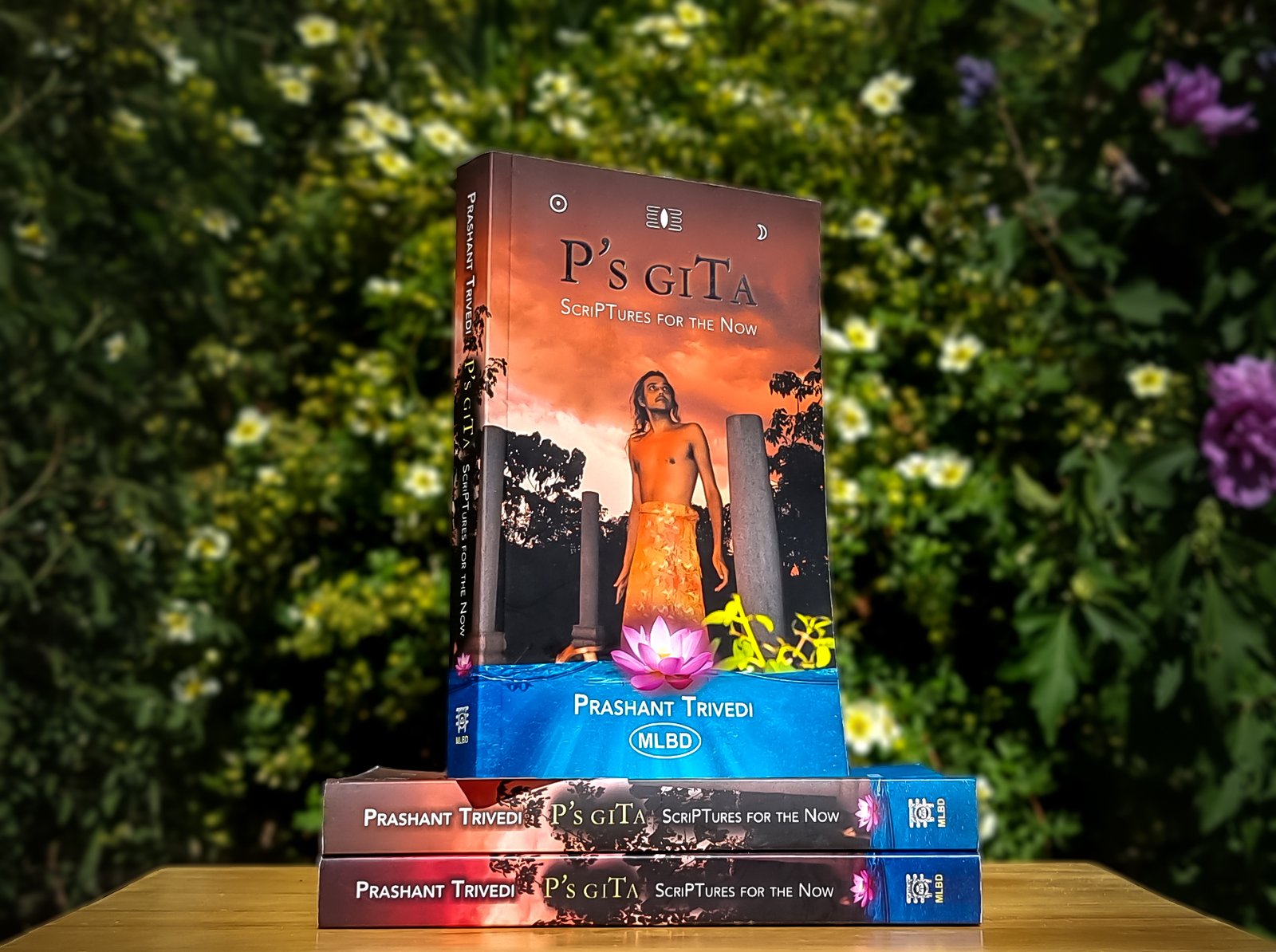
P's giTa – scriPTures for the Now considers life, consciousness, and the application of Vedic principles. His publications have reached readers internationally, with works translated into multiple languages. Lotus Ocean connects those written works with a wider inquiry that also finds expression through original music and performance.
About Lotus Ocean
Lotus Ocean is the body of work created by Prashant Trivedi, a Vedic Guru, author, linguist, audio-visual artist, filmmaker, and scholar. Combining Vedic wisdom with meditation, education, music, literature, and film, LotusOcean provides practical tools for integrating timeless Vedic wisdom with a (W)holistic approach to inner development, personal growth, and conscious living. Prashant Trivedi is the author of The Book of Nakshatras: A Comprehensive Treatise on the 27 Constellations (2005), The Rahu Ketu Experience (2002), and P's giTa – scriPTures for the Now, continuing to build an integrated body of work that brings ancient Vedic principles into meaningful dialogue with the modern world. Explore Lotus Ocean’s literary and creative disciplines.