Understanding a Herniated Disc
The spine contains discs between the vertebrae that act as cushions and allow the back to move. Each disc has a softer center surrounded by a tougher outer layer. A herniated disc occurs when some of the inner material pushes through a tear or weakened portion of the outer layer. If the disc irritates a nearby nerve, symptoms can travel beyond the back and into an arm or leg.
A lower-back disc herniation may cause symptoms similar to sciatica, including pain that travels through the buttocks and down the leg. Some people may also experience tingling, numbness, or weakness.
Because symptoms vary, there is no single exercise routine that works for everyone. A physical therapist or other qualified healthcare professional can assess your condition and help determine which movements are appropriate.
Why Exercise Can Help During Recovery
When back pain begins, it can be tempting to remain in bed or avoid movement altogether. Short periods of rest may be helpful during a painful flare-up, but prolonged inactivity can contribute to stiffness and muscle weakness. Mayo Clinic recommends gradually returning to activity and avoiding excessive bed rest.
A properly designed exercise program may help you:
- Maintain spinal mobility
- Strengthen abdominal and back muscles
- Improve posture and movement mechanics
- Support everyday activities
- Gradually rebuild physical tolerance
- Reduce the likelihood of becoming deconditioned
Physical therapy programs for herniated discs may include exercises designed to strengthen the lower back and abdominal muscles.
Walking
Walking is one of the simplest forms of movement to consider during recovery. It does not require special equipment and can be adjusted according to your current tolerance.
Start with a short, comfortable walk on a level surface. If that feels manageable, gradually increase the duration rather than suddenly increasing intensity.
The purpose is not to walk through worsening nerve pain. If walking causes symptoms to become significantly worse, stop and discuss your symptoms with a healthcare professional.
Regular movement can also help prevent the stiffness associated with spending too much time sitting or lying down.
Gentle Core Activation
The muscles around your abdomen, pelvis, and lower back help provide support for the spine. Building core strength can therefore be an important part of a rehabilitation program.
One basic approach is gentle abdominal bracing. Lie comfortably on your back with your knees bent. Without holding your breath, gently tighten your abdominal muscles as though preparing for a light impact. Hold the contraction briefly and then relax.
The movement should feel controlled rather than forceful. As your tolerance improves, a physical therapist may introduce more challenging stabilization exercises.
The American Academy of Orthopaedic Surgeons notes that strengthening muscles supporting the spine can improve stability and help with back pain and injury prevention.
Knee-to-Chest Stretch
A gentle knee-to-chest movement may be included in some back exercise programs. Mayo Clinic describes a knee-to-chest stretch as a movement performed while lying on the back with the knees bent. One knee is gently brought toward the chest while the abdominal muscles are engaged.
However, not every person with a disc herniation will respond to the same stretch. If bringing the knee toward the chest increases leg pain, numbness, or tingling, discontinue the movement and seek professional guidance.
Avoid bouncing or forcing the range of motion.
Gentle Hamstring Stretching
Tight muscles in the back of the thighs can affect how a person moves. Gentle flexibility work may therefore be incorporated into a broader rehabilitation program.
A hamstring stretch should be gradual and controlled. You should feel a mild stretch rather than sharp pain, burning, or increasing nerve symptoms.
Stretching should not involve aggressive pulling, bouncing, or twisting. Mayo Clinic recommends avoiding jerking and bouncing when stretching for lower-back and sciatic symptoms.
Pelvic Tilts
Pelvic tilts are another low-intensity movement sometimes used to improve awareness and control of the pelvis and lower back.
To perform a basic pelvic tilt, lie on your back with your knees bent and feet supported. Gently engage your abdominal muscles and make a small movement with your pelvis so that your lower back moves closer to the floor. Return to a comfortable neutral position.
The movement should be small and controlled. It should not cause sharp back pain or worsening symptoms down the leg.
A healthcare professional can help determine whether pelvic tilts are suitable for your particular presentation.
Bird Dog Progressions
Once basic movements become comfortable, a rehabilitation professional may introduce more demanding stabilization exercises. The bird dog is one example.
It generally involves starting on the hands and knees and gradually extending one arm and the opposite leg while maintaining a stable trunk. The objective is controlled movement rather than lifting the limbs as high as possible.
This exercise may be too demanding during an acute flare-up. It is generally more appropriate as strength and movement tolerance improve.
Modified Bridges
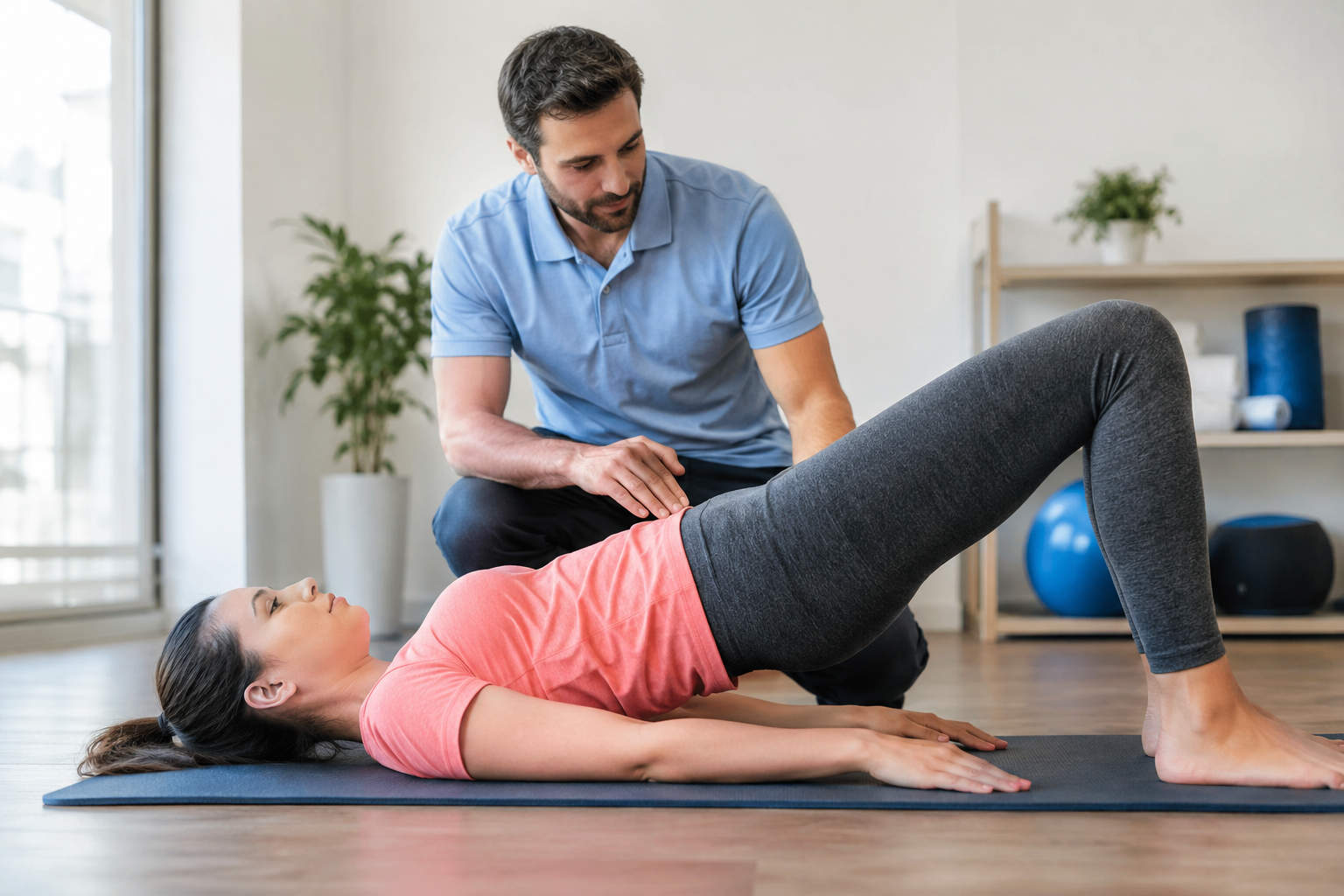
Bridges can strengthen muscles around the hips and trunk while encouraging controlled movement through the lower body.
A basic bridge begins with the person lying on the back with knees bent. The hips are then lifted gradually while maintaining control.
Not everyone with a disc herniation should begin with bridges. If the exercise causes significant pain or increases symptoms in the leg, it should be stopped. A physical therapist can modify the movement or choose another exercise.
Exercises to Approach Carefully
Not every popular back exercise is appropriate during disc herniation recovery. High-impact activities, heavy lifting, aggressive twisting, and exercises that consistently reproduce or worsen nerve symptoms may need to be temporarily modified.
That does not mean you must avoid exercise permanently. Instead, the focus should be on finding a level of activity that your body can tolerate while gradually increasing strength and mobility.
Pain that consistently travels farther down the leg, increasing numbness, or developing weakness deserves professional evaluation rather than simply adding more repetitions.
How to Progress Disc Herniation Exercises
Progression should be gradual. You might begin with short walks and simple mobility exercises before introducing strengthening movements.
A typical progression may involve:
- Managing acute symptoms and maintaining comfortable movement
- Adding gentle mobility exercises
- Introducing basic core activation
- Building strength in the trunk and hips
- Increasing walking duration or other low-impact activity
- Returning gradually to normal recreational and work activities
The exact timeline varies. Some people improve over several weeks, while others require longer rehabilitation. Mayo Clinic notes that conservative treatment often helps reduce symptoms over days or weeks, while physical therapy can help improve strength, movement, and pain.
The Importance of Professional Guidance
A personalized rehabilitation plan can be particularly useful when symptoms include radiating pain, numbness, tingling, or weakness.
A physical therapist can evaluate movement patterns and develop exercises based on your symptoms and functional goals. A qualified healthcare provider can also determine whether additional testing or treatment is necessary.
For people looking for conservative care, a Naples Chiropractor may also be part of a broader healthcare team, depending on the individual’s symptoms and diagnosis. Chiropractic care should be individualized, and persistent neurological symptoms should receive appropriate medical evaluation.
The goal of professional guidance is not simply to provide a list of exercises. It is to determine which movements are appropriate, how often they should be performed, and when it is safe to progress.
When to Stop Exercising and Seek Medical Care
Exercise should not be used to ignore serious symptoms. Contact a healthcare professional if back or neck pain spreads into an arm or leg, particularly when accompanied by numbness, tingling, or weakness.
Seek urgent medical attention if you develop significant or worsening weakness, difficulty walking, or changes in bladder or bowel control. Numbness around the inner thighs, buttocks, or genital area can also indicate a serious neurological problem requiring emergency evaluation.
These symptoms are not situations where you should attempt additional disc herniation exercises at home.
Building a Sustainable Recovery Routine
Recovery is usually more successful when exercise becomes a consistent part of daily life rather than an occasional activity performed only when symptoms are severe.
Start with movements that are comfortable and manageable. Pay attention to how your symptoms respond during and after exercise. If a movement consistently aggravates symptoms, it may need to be modified or replaced.
As strength and mobility improve, exercises can become more challenging. Walking, core strengthening, flexibility work, and controlled functional movements can all contribute to a well-rounded program.
The most appropriate disc herniation exercises depend on the location of the herniation, the presence of nerve irritation, your current strength, and your overall health. A personalized program can help you progress without unnecessarily aggravating symptoms.
Final Thoughts
Disc herniation can be painful and disruptive, but recovery does not necessarily require complete inactivity. Appropriate movement can help maintain mobility and rebuild strength while the body heals.
Walking, gentle mobility exercises, core activation, stretching, and progressive strengthening may all have a role when they are appropriate for the individual. The important principle is gradual progression rather than forcing painful movements.
If you are experiencing persistent back pain, leg symptoms, numbness, tingling, or weakness, consider speaking with a qualified healthcare professional before starting a new exercise program. The right disc herniation exercises can support recovery, but the right selection and progression are just as important as the exercises themselves.
Frequently Asked Questions
What are the best disc herniation exercises?
There is no single best exercise for every person with a herniated disc. Walking, gentle mobility work, core activation, stretching, and progressive strengthening may be used depending on symptoms and physical ability. A physical therapist can help determine which movements are appropriate.
Can exercise make a herniated disc worse?
Certain exercises can aggravate symptoms, particularly if they involve movements that increase nerve irritation or place excessive strain on the back. Exercise should be gradual and should not be used to push through severe or worsening pain.
Should I rest if I have a herniated disc?
Short periods of rest may help during a painful flare-up, but prolonged bed rest is generally not recommended. Gradually returning to comfortable activity can help prevent stiffness and muscle weakness.
Is walking good for a herniated disc?
Walking can be a useful low-impact activity for many people. Begin with a comfortable duration and increase gradually. If walking significantly increases radiating pain, numbness, tingling, or weakness, stop and seek professional advice.
How long does a herniated disc take to heal?
Recovery time varies considerably. Many people experience improvement with conservative treatment over several weeks, although symptoms can sometimes take longer to resolve.
Can a chiropractor help with a herniated disc?
A chiropractor may provide conservative care for some people with back pain, but treatment should be individualized based on the diagnosis and symptoms. Anyone experiencing significant weakness, progressive neurological symptoms, or bowel or bladder changes should receive appropriate medical evaluation promptly.
When should I see a doctor for a herniated disc?
You should seek medical advice for persistent or severe pain, pain that travels into an arm or leg, numbness, tingling, or weakness. Immediate medical attention is warranted for significant weakness, saddle-area numbness, or new bowel or bladder problems.
Can I do disc herniation exercises without physical therapy?
Some gentle activities, such as comfortable walking, may be reasonable for many people. However, if you have significant symptoms or have been diagnosed with a herniated disc, professional guidance can help ensure your exercise program is appropriate and progresses safely.