Understanding Spinal Decompression Therapy
Spinal decompression therapy is a non invasive treatment that uses a specialized motorized table to carefully stretch the spine. Unlike simple traction devices, modern decompression systems use computerized controls to precisely adjust the amount of force applied throughout each treatment session.
The primary objective is to reduce pressure between the vertebrae, allowing compressed discs to receive improved circulation, hydration, and nutrients. As pressure decreases, irritated nerves often experience relief, helping reduce pain and improve mobility.
A spinal decompression machine creates gentle cycles of stretching and relaxation, allowing the spine to decompress safely while minimizing muscle guarding that often occurs during manual stretching.
How the Machine Actually Works
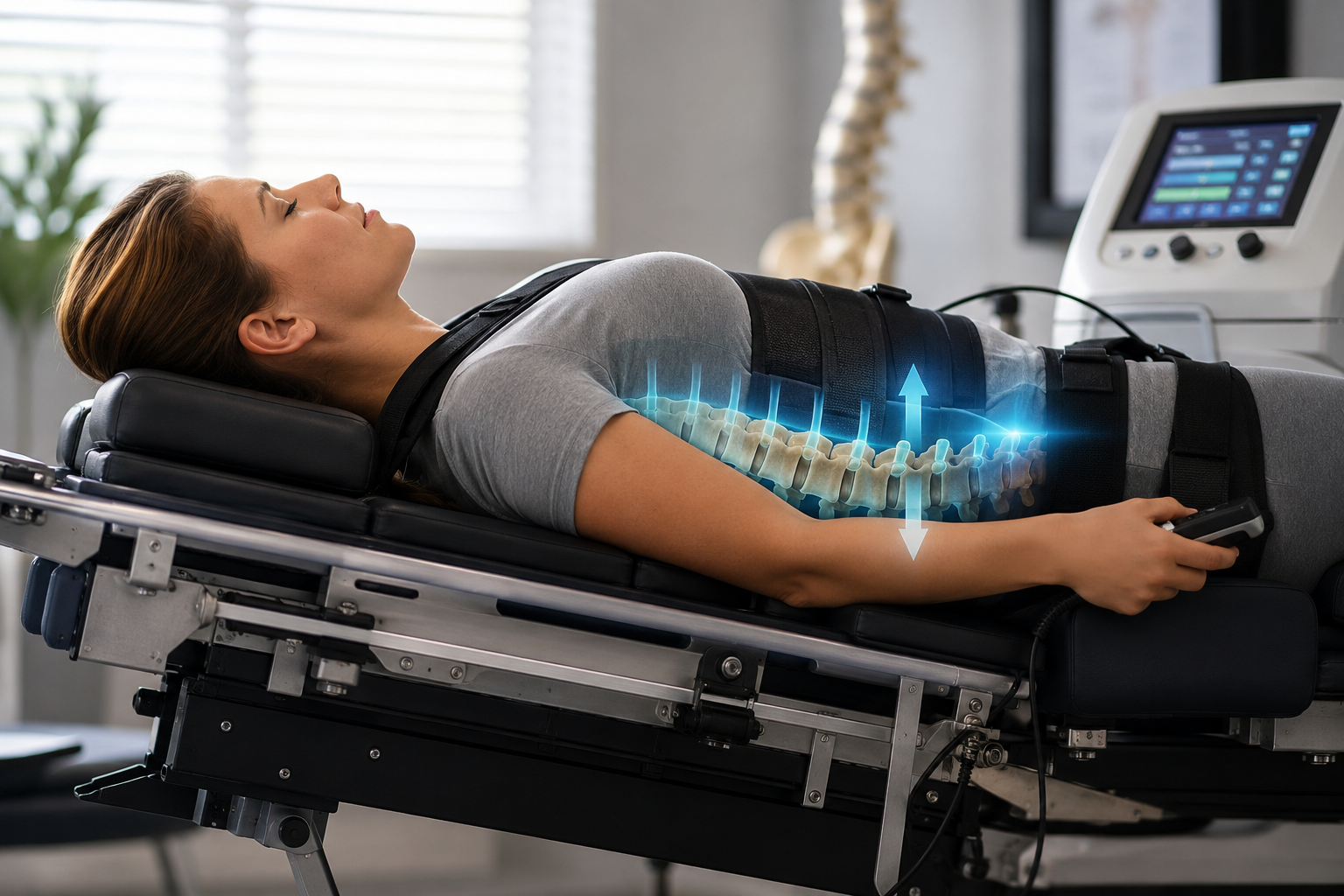
The treatment begins with the patient lying comfortably on a specially designed decompression table. Soft harnesses secure the upper body and pelvis, allowing the machine to target specific areas of the spine.
Once the treatment program begins, the machine gradually applies a carefully calculated pulling force. The computerized system continuously adjusts the tension based on the patient’s condition and comfort level.
As the spine gently stretches, several beneficial changes occur:
- Pressure inside spinal discs decreases.
- Bulging or herniated discs may retract slightly.
- Nerve compression may be reduced.
- Blood flow to injured tissues improves.
- Oxygen and nutrients reach damaged structures more effectively.
- Muscle tension gradually decreases.
See how the decompression table gently stretches the spine. This controlled movement is one of the key reasons why modern decompression therapy differs from traditional spinal traction.
Rather than applying constant force, a spinal decompression machine creates alternating phases of stretching and relaxation, allowing muscles to remain relaxed throughout the session.
Conditions That May Benefit from a Spinal Decompression Machine
Many spinal conditions involve pressure on discs or nerves. By reducing this pressure, decompression therapy may provide significant relief for appropriate candidates.
Common conditions include:
Herniated Discs
When the soft center of a spinal disc pushes outward, nearby nerves may become irritated. A spinal decompression machine may help relieve disc pressure and encourage improved healing.
Bulging Discs
Even without a complete herniation, bulging discs can create discomfort and stiffness. Gentle decompression may reduce internal disc pressure while improving flexibility.
Sciatica
Sciatica often results from compression of the sciatic nerve. Decompression therapy may reduce pressure contributing to leg pain, numbness, and tingling sensations.
Degenerative Disc Disease
As spinal discs lose hydration with age, they become thinner and less effective at absorbing shock. Decompression may help improve nutrient exchange within the affected discs.
Chronic Lower Back Pain
For patients experiencing long lasting mechanical back pain, spinal decompression may become an important component of a conservative treatment program.
What Happens During a Treatment Session?
Most spinal decompression sessions last between 20 and 30 minutes.
After reviewing the patient’s symptoms and imaging studies when available, the provider programs the spinal decompression machine according to the individual’s condition.
During treatment:
- The patient remains fully clothed.
- Gentle stretching cycles begin slowly.
- Pressure gradually increases to therapeutic levels.
- The patient experiences a mild pulling sensation.
- Muscles stay relaxed throughout the session.
- Most people report little to no discomfort.
Many patients describe the experience as relaxing and even fall asleep during treatment.
Why Computerized Precision Matters
One major advantage of today’s spinal decompression machine is its computerized control system.
Unlike manual traction, computerized decompression can:
- Target specific spinal levels.
- Adjust force precisely.
- Monitor treatment progress.
- Reduce muscle resistance.
- Customize therapy for each patient.
This precision helps maximize therapeutic benefits while improving patient comfort.
Benefits Beyond Pain Relief
Although pain reduction is often the primary goal, spinal decompression therapy may provide several additional benefits.
Improved Mobility
Reducing spinal compression often allows patients to move more freely with less stiffness.
Better Posture
As spinal structures experience less pressure, patients frequently notice improved posture and body alignment.
Reduced Muscle Spasms
Back pain often causes muscles to tighten defensively. Gentle decompression may reduce these protective spasms.
Enhanced Healing
Improved circulation supports the body’s natural repair mechanisms by delivering oxygen and nutrients to injured tissues.
Fewer Pain Episodes
Many patients report experiencing fewer recurring flare ups after completing a recommended treatment plan.
Is a Spinal Decompression Machine Safe?
When used by qualified healthcare professionals, spinal decompression therapy is generally considered safe for properly selected patients.
A complete evaluation should always be performed before beginning treatment. Healthcare providers review medical history, physical examination findings, and imaging studies when appropriate.
Certain conditions may prevent the use of spinal decompression therapy, including:
- Severe osteoporosis
- Recent spinal fractures
- Spinal infections
- Certain tumors affecting the spine
- Advanced spinal instability
- Pregnancy in some cases
Proper patient screening helps ensure safe and effective care.
Combining Decompression with Chiropractic Care
Many patients achieve better results when spinal decompression is combined with other conservative therapies.
A Naples Chiropractor may recommend treatment plans that include:
- Chiropractic adjustments
- Therapeutic exercises
- Stretching programs
- Postural correction
- Core strengthening
- Lifestyle recommendations
- Ergonomic education
By addressing both spinal alignment and disc health, patients often experience more comprehensive improvement.
What Results Can Patients Expect?
Results vary depending on the underlying condition, its severity, and how long symptoms have been present.
Some individuals notice improvement after only a few sessions, while others require several weeks of consistent treatment before significant progress occurs.
Patients who follow home exercise recommendations, maintain good posture, and remain physically active often achieve better long term outcomes.
Although a spinal decompression machine is not a cure for every spinal condition, it offers many people an opportunity to reduce pain without surgery or prolonged medication use.
Supporting Long Term Spine Health
Completing decompression therapy is only one part of maintaining a healthy spine.
Patients can help preserve treatment results by:
- Maintaining a healthy weight
- Exercising regularly
- Strengthening core muscles
- Practicing proper lifting techniques
- Avoiding prolonged sitting
- Improving workstation ergonomics
- Sleeping on supportive mattresses
- Staying hydrated to support disc health
Regular follow up care with a Naples Chiropractor may also help detect minor issues before they become more serious.
Choosing the Right Provider
Not every clinic offers the same level of experience with spinal decompression therapy. When selecting a provider, consider factors such as:
- Experience treating spinal conditions
- Comprehensive patient evaluations
- Personalized treatment plans
- Modern decompression technology
- Integration with rehabilitation services
- Positive patient reviews
A knowledgeable provider will explain how the spinal decompression machine works, discuss realistic expectations, and answer any questions before treatment begins.
Final Thoughts
Back pain does not always require invasive procedures or long term medication use. Modern spinal decompression therapy provides a conservative option that focuses on relieving pressure within the spine while supporting the body’s natural healing process.
A spinal decompression machine uses precise, computerized technology to gently stretch the spine, improve circulation, reduce nerve compression, and promote healthier spinal discs. See how the decompression table gently stretches the spine. This gentle and controlled movement has helped many individuals experience meaningful improvements in pain, mobility, and overall function.
When incorporated into a personalized treatment plan developed by a qualified Naples Chiropractor, spinal decompression therapy may become an effective part of long term spine care. If you are exploring conservative solutions for chronic back pain, learning more about how a spinal decompression machine works could be the first step toward lasting relief.
For more health and wellness information, visit https://laughteronbroadway.com/.
Frequently Asked Questions
How does a spinal decompression machine relieve back pain?
A spinal decompression machine gently stretches the spine to reduce pressure on spinal discs and nerves. This process may improve circulation, reduce inflammation, and promote healing of damaged tissues.
Is spinal decompression painful?
Most patients describe the treatment as comfortable. The stretching is gradual and carefully controlled, producing only a gentle pulling sensation.
How many sessions are usually needed?
The number of sessions varies depending on the patient’s condition, severity of symptoms, and treatment goals. Many treatment plans involve multiple sessions over several weeks.
Who should avoid spinal decompression therapy?
Individuals with certain conditions such as spinal fractures, severe osteoporosis, spinal infections, or spinal tumors may not be suitable candidates. A thorough evaluation is necessary before treatment.
Can spinal decompression replace surgery?
In some cases, spinal decompression therapy may help patients avoid surgery by reducing symptoms. However, severe spinal conditions may still require surgical intervention depending on the diagnosis.
Can a Naples Chiropractor provide spinal decompression therapy?
Yes. Many patients receive spinal decompression therapy as part of a comprehensive treatment plan developed by a qualified Naples Chiropractor that may also include chiropractic adjustments, exercise therapy, and posture correction.