Disaster recovery looks like emergency management from the outside. It is not. The emergency management phase — search and rescue, immediate resource deployment, life-safety operations — has a defined timeline. It ends. Disaster recovery does not end quickly. It is a months-long, sometimes years-long process of coordinating across federal agencies, state programs, local governments, and individual communities to rebuild infrastructure, restore services, and reconnect displaced residents with the support systems they need.
The skills that make someone effective in the acute emergency phase and the skills required for long-term recovery overlap but are not identical. Emergency response rewards speed, decisiveness, and tactical clarity. Recovery demands something harder to train: the ability to sustain organizational momentum across an extended timeline, manage competing institutional priorities without losing focus, and communicate credibly with a community that is exhausted, frustrated, and watching closely.
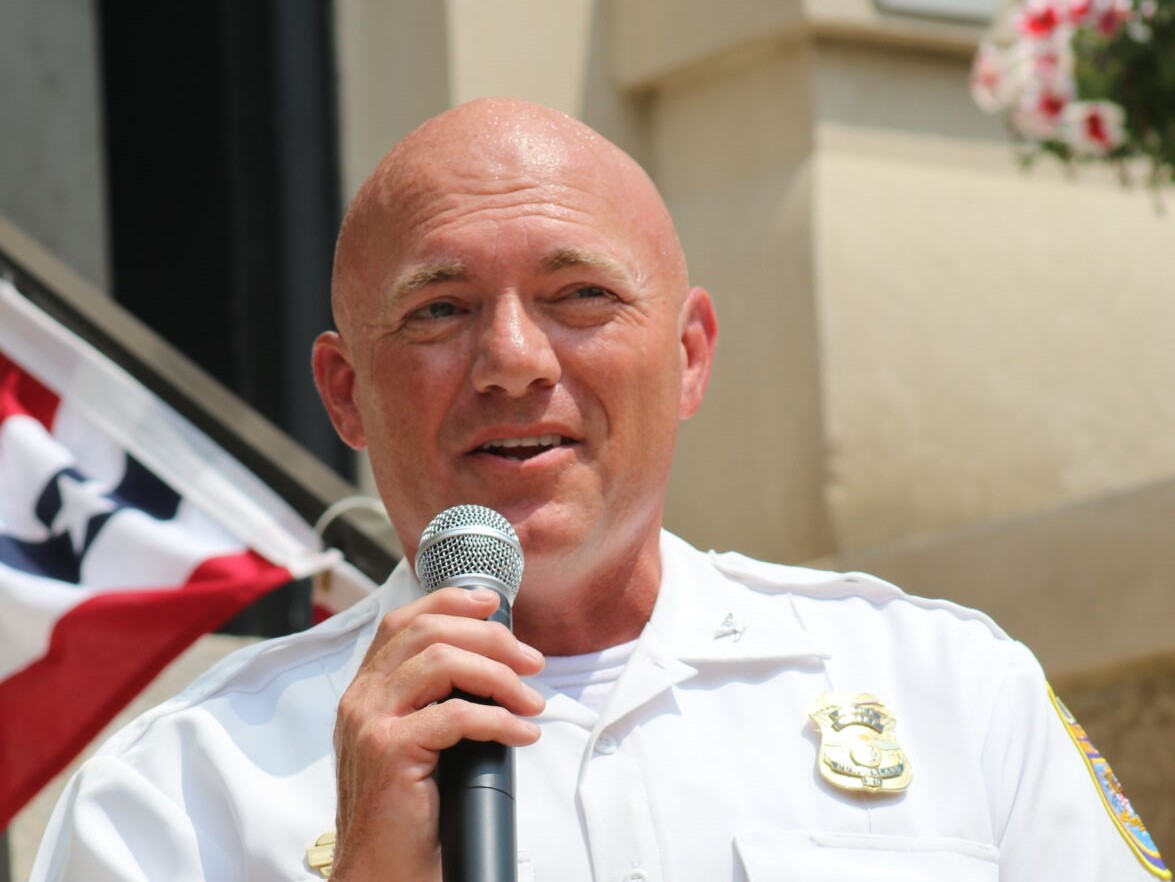
Chuck Ternent‘s appointment as Chair of the Western Maryland Flood Recovery Committee following the May 2025 flooding reflects a judgment about which kind of leader the region needed. His career produced both.
The Nature of the Challenge
The May 2025 flooding in Western Maryland was not a single discrete event. It was a regional disruption with cascading consequences — affecting infrastructure, housing, community services, and economic activity across a geographic area that was already navigating the pressures common to rural and post-industrial communities.
Long-term flood recovery requires a specific operational posture. Federal disaster assistance programs move through bureaucratic timelines that bear no resemblance to the urgency residents feel in the immediate aftermath. State and local agencies must coordinate without clear unified command authority, relying instead on relationships, communication, and shared accountability. Community members need accurate information delivered consistently over a period when uncertainty is high and institutional trust is fragile.
The Chair of a regional flood recovery committee sits at the center of all of this — not as a first responder, but as a sustained coordinator. The role requires someone who can convene stakeholders who do not naturally align, communicate up to state and federal partners while remaining accountable to local residents, and maintain operational discipline over a recovery timeline that extends well past the point when media attention has faded and political urgency has cooled.
Why Law Enforcement Command Experience Transfers
There is a common assumption that disaster recovery leadership is primarily a function of emergency management credentials. Chuck Ternent‘s background complicates that assumption productively.
Senior law enforcement executives manage sustained, complex operations that require exactly the competencies long-term recovery demands. A Chief of Police coordinates across agencies — municipal departments, county sheriffs, state police, federal law enforcement partners — on a continuous basis, often without formal authority over those external agencies. Coordination without command authority is the default operating condition of law enforcement executive leadership, not an exception to it.
Chuck Ternent spent more than 30 years developing those coordination skills within the Cumberland Police Department and across the broader Western Maryland public safety ecosystem. As a detective supervisor, he managed multi-agency investigations — cases where evidence, jurisdiction, and prosecutorial strategy required sustained alignment among parties with different institutional interests. As Captain, he oversaw high-crime patrol districts and directed department-wide strategic responses to crime trends that did not resolve quickly. As Chief of Police from 2019 onward, he led an institution through the COVID-19 pandemic, national policing pressures, and staffing crises that required sustained executive judgment over months and years.
Each of these required what disaster recovery requires: maintaining organizational direction when the situation is dynamic, resources are constrained, and the timeline for resolution is unclear.
Communication Under Sustained Pressure
One of the least discussed but most critical competencies in disaster recovery leadership is communication — not crisis communication in the acute sense, but the ongoing, accurate, and credible delivery of information to a community that has been disrupted and is watching institutional performance closely.
Chuck Ternent‘s training in hostage negotiation is relevant here in ways that might not be immediately obvious. Hostage negotiation is fundamentally about sustained, high-stakes communication under conditions of extreme pressure, incomplete information, and asymmetric stakes. The negotiator cannot control the situation. They can only influence it — through the quality of their communication, the consistency of their presence, and the credibility they establish over the course of the engagement.
Long-term disaster recovery communication requires a structurally similar orientation. Recovery leaders cannot control the pace of federal funding approvals. They cannot accelerate contractor timelines or eliminate bureaucratic friction. What they can control is how accurately and consistently they communicate with the community about where the process stands, what is being done, and what residents can expect. That communication, sustained over months, is what separates recovery efforts that maintain community confidence from those that collapse under the weight of unmet expectations.
Ternent’s experience as a trained hostage negotiator, combined with more than three decades of community-facing public safety leadership, represents a specific kind of preparation for that challenge.
Multi-Discipline Fluency as a Recovery Asset
Flood recovery coordination in Western Maryland requires engagement with agencies that do not share a common professional culture. Federal disaster assistance programs operate under their own frameworks and timelines. State emergency management offices have distinct protocols and reporting requirements. Local government bodies — county commissioners, municipal councils, public works departments — have their own decision-making processes and constituency pressures.
A recovery chair who comes from a single-discipline background must learn how these different institutional systems work while simultaneously trying to coordinate among them. Chuck Ternent‘s career across emergency medical services, fire service, and law enforcement means he arrives with a working familiarity with how different public safety and emergency response systems operate — their cultures, their command structures, and the points where institutional friction is most likely to emerge.
That cross-discipline fluency does not eliminate the complexity of multi-agency coordination. But it compresses the learning curve significantly and allows a recovery leader to anticipate friction points before they become operational problems.
The Consulting and Training Extension
Chuck Ternent‘s current professional services — public safety consulting, emergency management, disaster recovery coordination, and law enforcement training — are not a departure from his career. They are its direct application.
Organizations and agencies seeking consulting support in emergency management or disaster recovery are looking for someone who has operated inside the systems they are trying to improve, at a level of seniority that produced genuine accountability for outcomes. Ternent’s tenure as Chief of Police satisfies that requirement. His current role chairing the Western Maryland Flood Recovery Committee demonstrates that the competencies he built in law enforcement translate directly to the emergency management domain.
Law enforcement agencies and training programs seeking instructors face a similar calculus. A trainer who has held every rank being discussed — from patrol officer through detective, supervisor, Captain, and Chief — brings a credibility that no academic background can replicate. Ternent’s experience in homicide investigation, arson inquiry, hostage negotiation, crime scene analysis, and executive leadership represents a training portfolio grounded in actual operational practice.
That combination — executive-level law enforcement experience, active emergency management leadership, and cross-discipline public safety fluency — defines what Chuck Ternent brings to his consulting and training work.
About Chuck Ternent
Chuck Ternent is a public safety leader, emergency management professional, and disaster recovery coordinator based in Western Maryland. With more than 30 years of experience across law enforcement, emergency medical services, and fire service, he served as Chief of Police of the Cumberland Police Department from 2019 until his retirement in 2025. He currently chairs the Western Maryland Flood Recovery Committee and provides consulting and training services in public safety, emergency management, and law enforcement leadership.