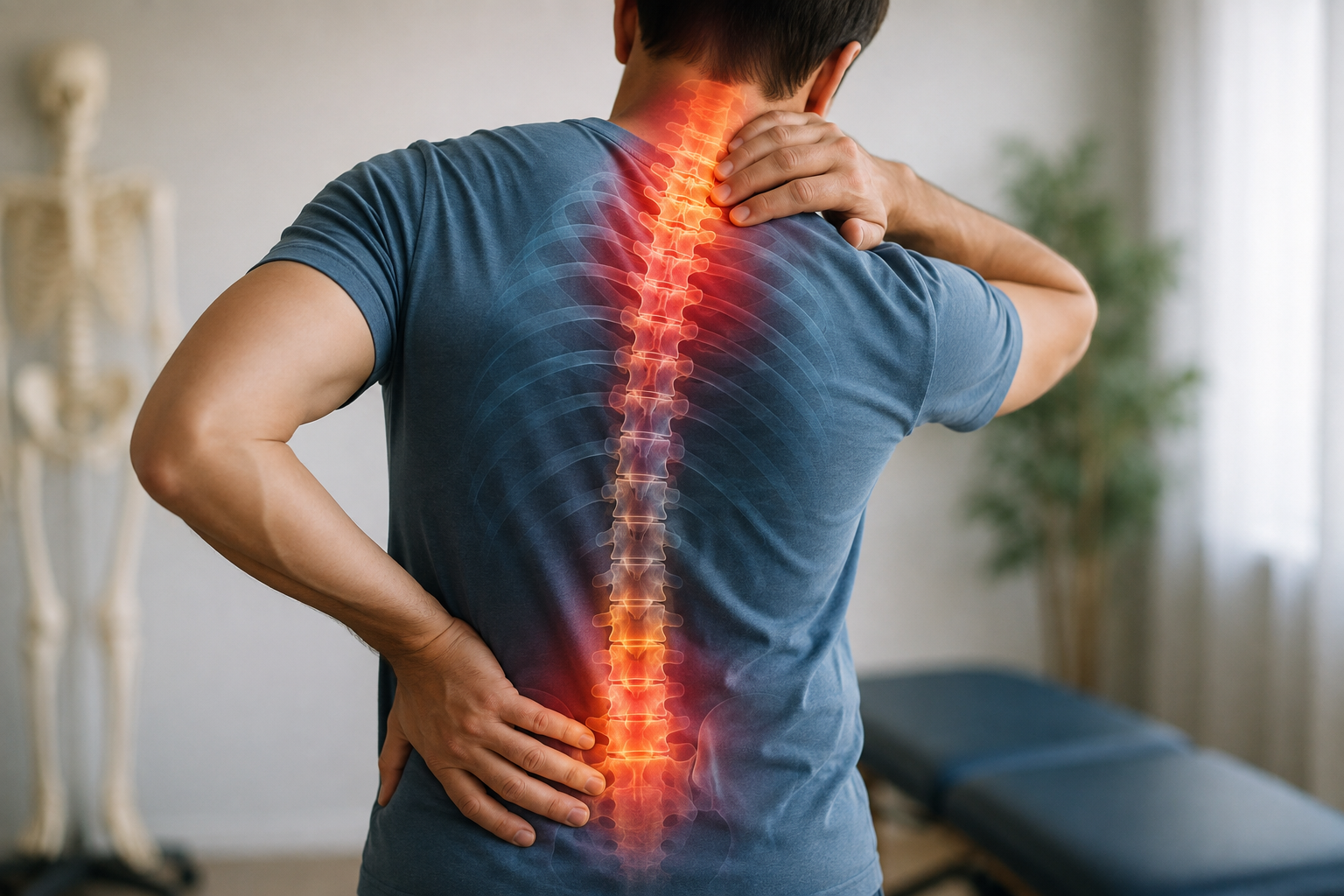
What Is a Pinched Nerve?
A pinched nerve occurs when surrounding tissue puts excessive pressure on a nerve. The pressure can come from bones, cartilage, muscles, tendons, or other structures. In the spine, a herniated disc or changes that narrow the spaces around nerve roots can contribute to compression. Outside the spine, nerves can also become compressed in areas such as the wrist, elbow, or ankle.
The symptoms depend on which nerve is affected. Common signs include pain that travels along an arm or leg, tingling, numbness, burning sensations, and weakness. For example, compression of a nerve in the lower back may produce symptoms that travel into the buttock and leg, while a compressed nerve in the neck can cause discomfort or altered sensation into the shoulder, arm, or hand.
Because similar symptoms can have different causes, patients should avoid assuming that every instance of radiating pain is automatically a pinched nerve.
What Causes Nerve Compression?
Several conditions and everyday activities can contribute to nerve compression. A herniated disc is one common cause when material from a spinal disc presses against a nerve root. Bone spurs and age-related changes can also narrow spaces through which nerves travel.
Repetitive movements may contribute to compression as well. Jobs, hobbies, sports, and other activities that repeatedly place stress on a particular body area can increase the likelihood of nerve irritation. Injuries, arthritis, swelling, and prolonged positioning may also play a role.
Understanding the underlying cause is an important part of effective pinched nerve treatment. Simply masking symptoms without considering what is creating the pressure may not provide lasting improvement.
Recognizing the Symptoms
Pain is often the symptom that gets the most attention, but a pinched nerve can cause several different sensations. Patients may experience:
- Sharp, aching, or burning pain
- Tingling or pins-and-needles sensations
- Numbness or reduced sensation
- Muscle weakness
- Pain that travels along an arm or leg
- Difficulty gripping objects or moving a limb normally
Symptoms may become more noticeable during certain movements or positions. Some people also notice that their symptoms are worse while sleeping.
Weakness deserves particular attention because it can indicate that nerve function is being affected. Persistent or worsening numbness, tingling, or weakness should be evaluated by an appropriate healthcare professional rather than ignored.
How Is a Pinched Nerve Diagnosed?
A healthcare professional typically begins with a discussion of your symptoms and a physical examination. The location, duration, intensity, and triggers of your symptoms can provide useful clues about which nerve may be involved.
Depending on the situation, additional testing may be recommended. X-rays can show changes in bone structure, while nerve conduction studies and electromyography may help assess how nerves and muscles are functioning. Other imaging studies may be appropriate when a spinal condition or another structural problem is suspected.
A proper diagnosis is important because symptoms such as numbness or radiating pain can have multiple causes. A treatment plan should be based on the suspected source rather than symptoms alone.
Conservative Pinched Nerve Treatment
Many pinched nerves improve without surgery. Conservative care may include temporary rest, modifying activities that worsen symptoms, physical therapy, medications when appropriate, and other non-invasive approaches. Mayo Clinic notes that many people recover within days or weeks with rest and other self-care measures, although recovery time varies according to the cause and severity.
Non-invasive care may relieve nerve compression.
Physical therapy can be particularly useful when muscle weakness, limited flexibility, posture, or movement patterns contribute to irritation. A qualified professional can recommend exercises and activity modifications designed to reduce stress on the affected area while supporting mobility and strength.
Some patients may also use hot or cold applications for temporary symptom relief. Over-the-counter pain medications may be recommended for certain individuals, but they are not appropriate for everyone. Patients should follow medication instructions and speak with a healthcare professional if they have questions about safety or interactions.
How Chiropractic Care May Fit Into Treatment
For patients considering conservative options, chiropractic care may be one component of a broader plan when appropriate. A chiropractor may evaluate spinal movement, posture, joint mechanics, and other factors that could contribute to discomfort.
If you’re searching for Chiropractor Naples, it is important to choose a provider who takes time to understand your symptoms and considers whether chiropractic care is appropriate for your particular condition.
Treatment should be individualized rather than based on a one-size-fits-all approach. Depending on the diagnosis, conservative care may focus on improving mobility, reducing mechanical stress, supporting proper movement, and helping patients return gradually to normal activities.
Patients should also understand that chiropractic treatment is not a substitute for medical evaluation when symptoms suggest significant nerve dysfunction or another serious condition.
When More Advanced Treatment May Be Needed
Conservative treatment is not appropriate as the only approach for every patient. If symptoms persist, worsen, or involve significant neurological changes, further evaluation may be necessary.
In some situations, medications, injections, or other interventions may be considered. Surgery is generally reserved for selected cases where symptoms do not improve with conservative care or where significant nerve compression requires decompression. The exact procedure depends on the location and cause of the compression.
This is why monitoring your progress is an important part of pinched nerve treatment. A treatment plan may need to change if symptoms are not improving as expected.
Warning Signs Patients Should Not Ignore
Not every episode of tingling or pain is an emergency, but certain symptoms require prompt medical attention. Significant or worsening weakness, extensive numbness, difficulty walking, or changes in bladder or bowel control can indicate a more serious problem.
For example, Mayo Clinic recommends immediate medical attention for certain cases involving sudden leg weakness or numbness and loss of bladder or bowel control in the setting of sciatica-like symptoms.
Patients should also seek evaluation after a significant injury or when symptoms are severe, rapidly worsening, or not responding to reasonable self-care.
Supporting Recovery at Home
Your daily habits can influence recovery. Avoiding activities that aggravate symptoms may give irritated tissues time to settle. At the same time, prolonged inactivity is not always beneficial. Once appropriate, gradual movement and exercises recommended by a qualified professional can help restore function.
Good posture and ergonomic habits can also reduce unnecessary stress. If your symptoms are related to repetitive work, taking regular breaks and changing positions may be useful. Maintaining appropriate strength and flexibility may help support long-term spinal and joint function.
Patients should follow the specific recommendations of their healthcare provider rather than beginning aggressive exercises or stretches without understanding the cause of their symptoms.
Choosing the Right Approach
The best pinched nerve treatment is the one that matches the cause, location, severity, and needs of the individual patient. Someone with a temporary irritation may improve with rest and activity modification, while another person with persistent nerve compression may need physical therapy, diagnostic testing, medication, or specialist evaluation.
A good treatment process begins with an accurate assessment. From there, patients can discuss conservative options and understand what signs would indicate the need for additional care.
The goal is to manage symptoms while addressing factors that may be contributing to nerve irritation. With appropriate evaluation and a personalized plan, many patients can experience improvement and gradually return to their normal activities.
Frequently Asked Questions
How long does a pinched nerve take to heal?
Many mild cases improve within several days or weeks, particularly when the source of compression is temporary and aggravating activities are avoided. Persistent or worsening symptoms should be evaluated rather than assuming they will resolve on their own.
What does a pinched nerve feel like?
A pinched nerve can cause sharp or aching pain, burning, tingling, numbness, or weakness. Symptoms may travel away from the area where the nerve is compressed, depending on the affected nerve.
Can a pinched nerve heal without surgery?
Yes. Many cases improve with conservative care, including rest, activity modification, physical therapy, and other appropriate treatments. Surgery may be considered when symptoms persist or significant compression requires surgical decompression.
Is chiropractic care appropriate for a pinched nerve?
Chiropractic care may be considered as part of conservative management for some patients, depending on the cause and severity of symptoms. An appropriate evaluation should come first to determine whether this approach is suitable.
When should I see a doctor for a pinched nerve?
You should seek professional evaluation if symptoms persist, become severe, worsen, or include significant numbness or weakness. Immediate medical attention may be necessary for certain serious neurological symptoms, including sudden weakness or changes in bladder or bowel control.
Can exercise help a pinched nerve?
Appropriate exercises can help improve strength, flexibility, and movement patterns in some cases. However, exercises should be selected based on the underlying condition because certain movements may aggravate nerve compression. Physical therapy may help determine which exercises are appropriate.
Can poor posture contribute to nerve irritation?
Poor positioning can contribute to mechanical stress in some situations. Improving posture, changing positions regularly, and using appropriate ergonomic habits may help reduce unnecessary strain. The specific cause of symptoms should still be evaluated.